How Dogs Experience Touch
When we talk about a dog’s sense of touch, we’re really talking about how the body gathers information and communicates with the brain.

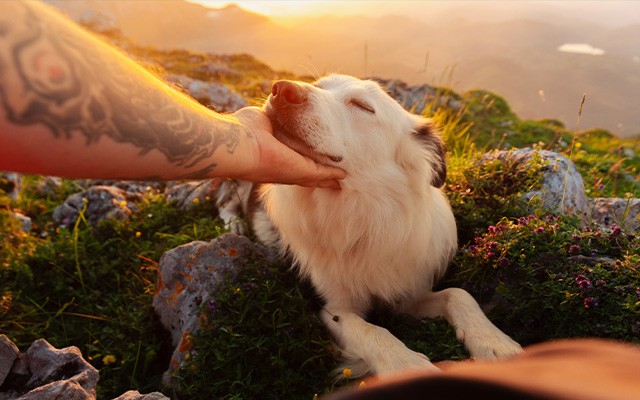
Touch is constant. Unlike the other senses, it never truly turns off. Every surface your dog stands on, every movement they make, every piece of equipment they wear, and every interaction they experience sends information into the nervous system.
This information plays a major role in emotional regulation, learning, and behavior.
How the Body, Pain, and the Nervous System Shape Behavior
When we talk about a dog’s sense of touch, we’re really talking about how the body gathers information and communicates with the brain.
Touch is constant. Unlike the other senses, it never truly turns off. Every surface your dog stands on, every movement they make, every piece of equipment they wear, and every interaction they experience sends information into the nervous system.
This information plays a major role in emotional regulation, learning, and behavior.
How Dogs Experience Touch
Dogs gather tactile information through receptors located throughout the skin and deeper tissues. These receptors detect:
Pressure
Stretch
Vibration
Temperature
Pain
Together, they provide continuous feedback about the environment and the dog’s own body. This feedback helps dogs adjust movement, posture, balance, and responses to the world around them.
Touch is about contact AND awareness.
The Role of Whiskers
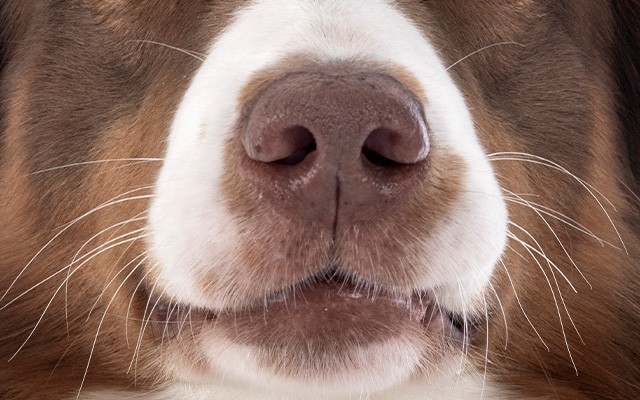
Whiskers, also known as vibrissae, are highly specialized touch organs. They are deeply rooted and richly supplied with nerves.
Whiskers amplify even tiny changes in air movement or surface contact and send this information through facial touch pathways in the brain. This allows dogs to detect proximity, movement, and spatial changes, especially in low light or tight spaces.
When whiskers are overstimulated, damaged, or restricted, dogs may appear unsettled or less confident navigating their environment.
How Touch Information Travels
Once touch, temperature, or pain is detected, that information travels through the nervous system.
Signals from the body move along spinal nerves to the brainstem.
Signals from the face and head travel through cranial nerves that connect directly to the brain.
These pathways act as fast communication routes, allowing dogs to respond quickly and appropriately.
Protective Reflexes
Some responses to touch and pain are designed to happen instantly.
Protective reflexes involving the spinal cord and brainstem allow dogs to withdraw from harmful stimuli before conscious thought occurs. This rapid response helps prevent further injury.
If you or your dog step on something sharp, the body pulls away first. Thinking comes later.
These reflexes are not learned behaviors. They are built-in safety mechanisms.
Pain and the Brain
Pain is not just a signal from the body. It is shaped and regulated by the brain.
Certain brain centers can increase or decrease pain sensitivity. This means pain is not static. It changes depending on emotional state, stress levels, past experiences, and duration.
When pain becomes chronic, the nervous system can become sensitized. Over time, even mild input can feel intense. Touch that was once neutral may become uncomfortable or threatening.
This has a direct impact on behavior, learning, and emotional regulation.
Pain and Behavior
Pain can quietly but profoundly change how a dog behaves.
A once-social dog may become irritable or reactive.
A motivated learner may seem withdrawn or disengaged.
Subtle discomfort can show up as avoidance, frustration, or aggression.
This is why pain must always be considered in behavioral assessment. A behavior that appears undesirable may actually be a communication of discomfort.
Whenever behavior changes, one important question should always be asked, “could this dog be in pain?"
Pain influences emotional state, decision-making, learning capacity, and how the world is perceived. Ignoring it can lead us to misunderstand behavior and apply ineffective or unfair interventions.
Touch, the Nervous System, and TTouch
Because touch feeds directly into the nervous system, it can either increase stress or promote regulation.
Approaches such as Tellington TTouch are built on this understanding. Rather than using touch to restrain or correct, TTouch uses gentle, mindful touch and movement to provide clear sensory input to the nervous system.
The goal is not to force change, but to support body awareness, balance, and emotional regulation.
When the nervous system feels safer, the brain can process information more effectively. This supports learning, resilience, and behavioral flexibility.
Touch becomes a tool for communication, not control.
🧠 Fun Touch Fact
Humans, dogs, and octopuses all experience touch very differently.
Humans rely heavily on hands and fingertips for fine tactile discrimination.
Dogs gather touch information across their entire body, including skin, joints, muscles, and especially whiskers. Touch is closely tied to emotional safety and nervous system regulation.
Octopuses take tactile processing to another level. Much of their touch processing happens within their arms themselves, allowing each arm to independently explore and respond to the environment.
Touch is about how the nervous system interprets information to stay safe.
🐶 Try This With Your Dog This Week
These activities should always feel comfortable and non-invasive. If your dog shows avoidance or stress, pause and reassess.
1. Observe Before You Touch
Notice how your dog responds to different types of touch. Do they lean in, soften, stiffen, or move away? Observation provides valuable information about comfort and consent.
2. Support Body Awareness
Slow, controlled movement exercises and gentle handling can help dogs feel their body in space. This supports confidence and nervous system regulation.
3. Respect Changes
If your dog suddenly avoids touch or reacts differently, consider discomfort as a possibility and seek appropriate professional support.
The Big Takeaway
The sense of touch provides continuous feedback that shapes how dogs feel, move, and behave. While tactile input itself may not always be the focus of behavior work, pain always matters.
Touch, like scent, vision, hearing, and taste, is not just about sensation.
It is about how the nervous system interprets information to support safety, learning, and choice.