The Power of the Nose
Dogs experience the world through scent first. Learn how smell shapes your dog’s emotions, behavior, memory, and learning.

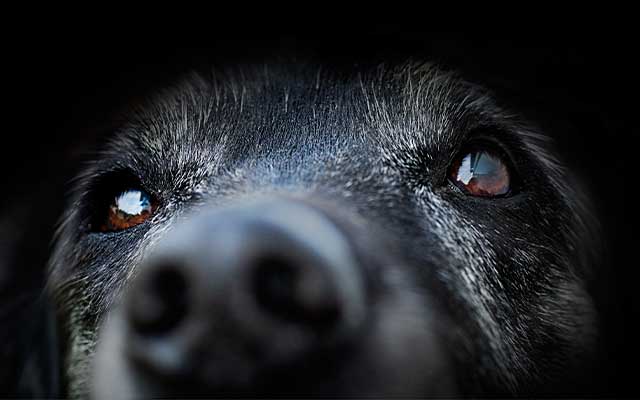
To your dog, the world is not built from images the way ours is. It is built from scent. Every paused moment on a walk, every deep inhale at the base of a tree, every slow investigation of the ground is your dog gathering information about their environment.
When your dog sniffs, they are learning who has been there, how recently, what emotional state they might have been in, whether they were stressed, calm, healthy, or unwell. Dogs can identify people and other animals by scent alone. They can pick up on emotional states, health changes, gender, and even movement patterns.
Their noses are so powerful that medical detection dogs can identify changes in blood sugar and subtle shifts in body chemistry. That level of sensitivity changes how we understand behavior, reactivity, and emotional responses.
This is also why some dogs react to another dog before they ever see them. Their nose already gathered the information.
A dog’s emotional and arousal state influences how scent information is processed. When arousal is high, scent can trigger faster, more intense emotional responses. When a dog is calm and regulated, scent becomes information rather than a trigger.
How Smell Connects Directly to Emotion
Smell is the only sense that does not pass through the brain’s usual filtering station. Instead, scent information travels straight into the emotional and memory centers of the brain.
Inside the nose, scent molecules are detected by specialized cells. That information moves to the olfactory bulb and then directly into areas responsible for emotion, memory, learning, and decision making.
This is why smells can instantly create excitement, fear, curiosity, or comfort. Your dog does not need to think about how they feel about a scent. Their body already knows.
Smell is also closely tied to instinctive behaviors such as bonding, nurturing, social interaction, and reproduction. It plays a role in how safe your dog feels, how they learn, and how they respond when something feels unfamiliar.
Dogs Also Smell With Their Mouth
Dogs have a second scent detection system called the vomeronasal organ. This system is designed specifically to detect pheromones, which are chemical signals used in canine communication.
This is how dogs exchange information related to social bonding, reproduction, emotional state, and subtle social cues. These signals connect directly to emotional and instinctive centers of the brain, which is why some scent encounters feel very intense for dogs.
🧠 Fun Smell Fact
Humans, dogs, and sharks experience scent very differently.
Humans rely heavily on vision and language, with scent playing a smaller role in daily decision making. While smell can trigger memories and emotions for us, it rarely guides moment-to-moment behavior.
Dogs, by contrast, experience the world primarily through scent. Their olfactory system connects directly to emotional and memory centers of the brain, allowing smell to shape how they feel, learn, and respond long before conscious thought.
Then there are sharks.
Some shark species can detect extremely small concentrations of scent molecules in water and follow scent gradients across long distances. Their olfactory system is built for navigation and survival rather than emotional interpretation.
Dogs do not just smell the world.
They experience it through scent.
Why This Matters for Behavior
Smell influences nearly everything your dog does.
Dogs use scent to recognize family members and other dogs.
Scent quickly gains emotional meaning, which is why one negative or positive experience can last a lifetime.
Dogs use smell to build memory and follow routes long after something has happened.
Chemical scent communication supports bonding, maternal care, and social relationships.
In some contexts, we want to encourage deep scent engagement. In others, we may gently limit sniffing so dogs can shift attention to visual or handler based tasks. Knowing when to invite scent and when to pause it helps support both learning and emotional balance.
The Big Takeaway
Your dog experiences the world through scent first. Smell shapes emotions, memory, confidence, and behavior.
Smell is not a distraction from training.
It is one of the foundations of how training works.